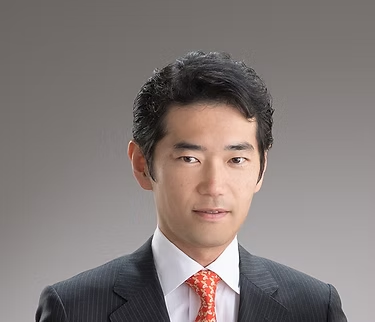
 Written by Hirotsugu Suwanai, MD, PhD
Journal Club of the Suwanai · Adrenal & Hypertension
Primary aldosteronism is a common cause of hypertension. When one adrenal gland is responsible, surgery may cure it — but the test that tells the subtypes apart is demanding.
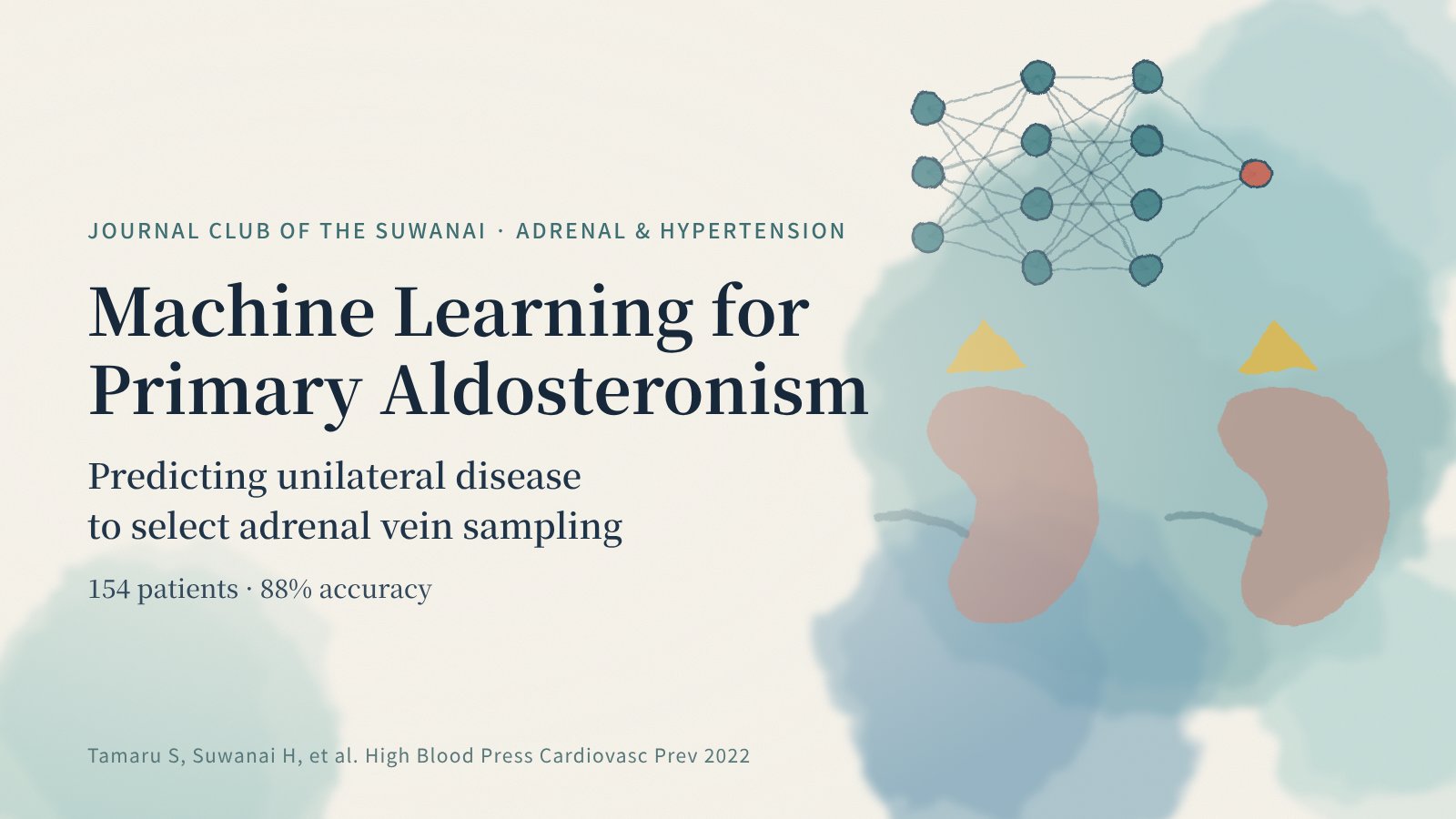
In 2022, High Blood Pressure & Cardiovascular Prevention published a study that used machine learning to predict the subtype of primary aldosteronism (PA). The work came from our group at Tokyo Medical University, and I was the second author. Read the original paper ↗
Key point: how to use the model in practice ↓
Why subtype prediction matters
In PA, the adrenal glands overproduce aldosterone. Unilateral PA carries a high cardiovascular risk and can improve after removal of the affected gland, whereas bilateral PA is mainly treated with medication.
The standard test to distinguish them is adrenal vein sampling (AVS), in which blood is drawn from each adrenal vein by catheter. It requires specialized skills and is available only at limited centers, so predicting in advance who needs AVS — and who can be observed — is an important clinical goal.
Methods: learning from 154 patients
We retrospectively analyzed 154 patients diagnosed with PA who underwent AVS at our hospital between January 2010 and June 2021. Using blood tests and confirmatory test results, we built a machine-learning model to predict unilateral or bilateral disease.
Results: four markers, strong performance
The model’s accuracy was 88%. The top predictors of unilateral PA were plasma aldosterone after the saline infusion test, the aldosterone-to-renin ratio after the captopril challenge test, serum potassium and the aldosterone-to-renin ratio.
Performance using the top four predictors (sensitivity 70%). Source: Tamaru et al., High Blood Press Cardiovasc Prev (2022).
Among patients who underwent surgery, those classified as unilateral by the predictors improved clinically after the operation, whereas those classified as bilateral did not.
Journal Club view: how to use the model in practice
With 99% specificity, a “unilateral” call from this model is highly reliable. Sensitivity, however, was 70%, so some unilateral cases may be missed. The model is therefore best seen not as a replacement for AVS but as a tool to prioritize patients for AVS, or to support decisions where AVS is hard to obtain.
It was developed in a single center with 154 patients, so external validation across institutions and testing protocols is essential. Its reliance on routinely available tests is a strength for real-world implementation.
Medical data meets AI
Specialized tests are a limited resource. Using everyday data to identify who truly needs them reduces patient burden and uses healthcare resources wisely — a good example of machine learning in endocrine practice.
REFERENCE
Tamaru S, Suwanai H, Abe H, Sasaki J, Ishii K, Iwasaki H, Shikuma J, Ito R, Miwa T, Sasaki T, Takamiya T, Inoue S, Saito K, Odawara M, Suzuki R. Machine learning approach to predict subtypes of primary aldosteronism is helpful to estimate indication of adrenal vein sampling. High Blood Press Cardiovasc Prev. 2022;29(4):375–383.
doi:10.1007/s40292-022-00523-8 ↗
This article is an independent English summary and commentary based on the original paper. No figures are reproduced.